
If you’ve been doing everything right — eating well, moving your body, staying consistent and still can’t seem to lose weight or fat, there may be something working against you that you can’t see in the mirror.
I consume a lot of health content. Not because I have a medical degree. I don’t. But because I believe the people who trust us with their health journeys deserve someone who actually does the homework.
A few months ago I went deep on a topic that stopped me in my tracks. I’ve since shared it with nearly every client and prospective new client who’s come in. It keeps coming up because it keeps being relevant.
It’s called visceral fat, and chances are you’ve heard the term. But what most people don’t realize is what it’s actually doing inside the body, and why it makes losing weight feel like pushing against a wall no matter how hard you try.
It’s Not the Fat You Can Pinch
Visceral fat isn’t the fat just under the skin. It’s the fat that sits deep inside your abdomen, wrapped around vital organs like your liver, pancreas, and intestines.
You can’t see it from the outside. You can’t feel it. And here’s what surprises most people: you can look completely normal, even slim, and still have dangerous levels of it.
Researchers call this TOFI: Thin on the Outside, Fat on the Inside.
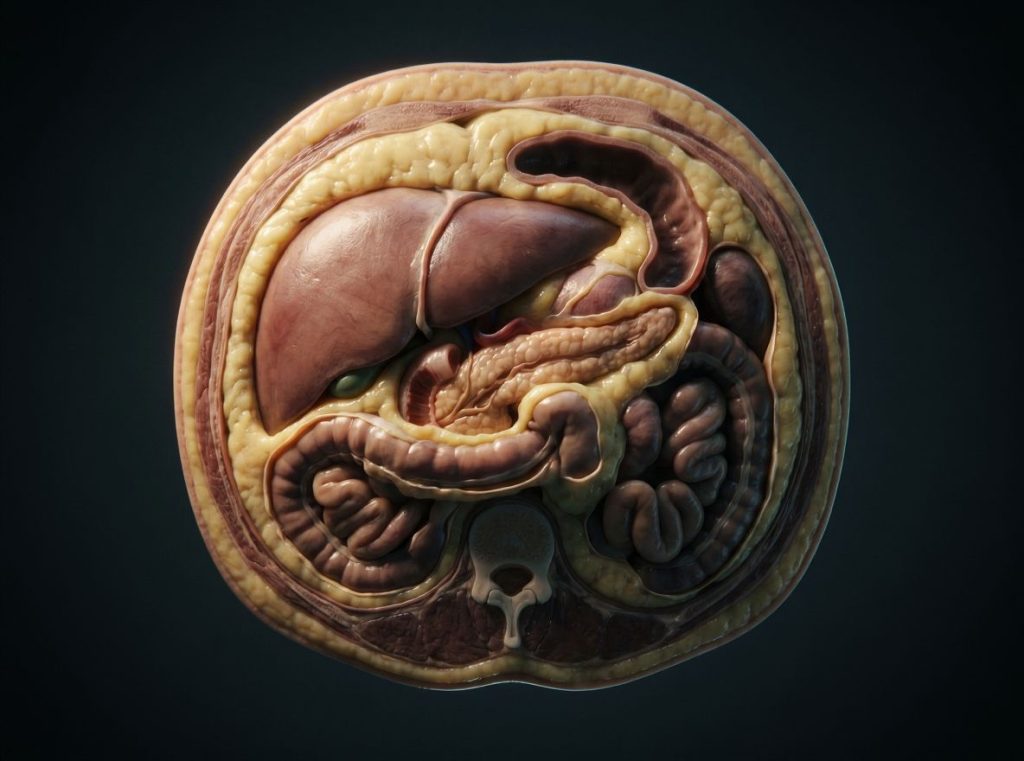
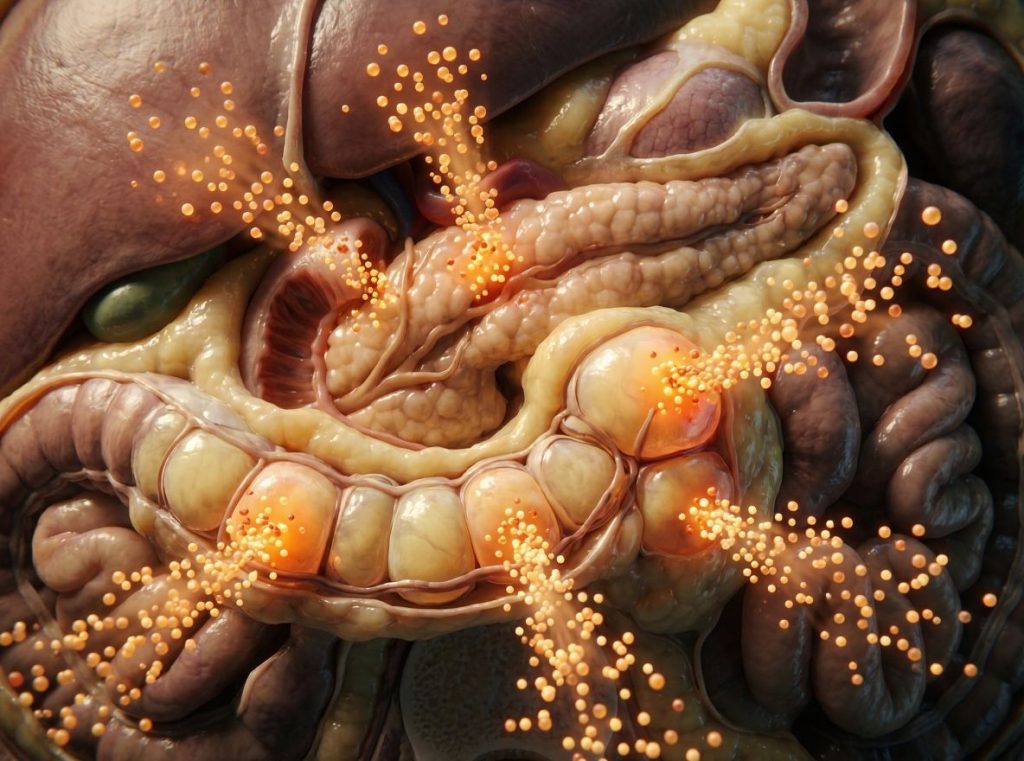
What makes visceral fat uniquely problematic is that it’s biologically active. It doesn’t just sit there passively. It continuously releases inflammatory chemicals called cytokines, creating a state of chronic, low-grade inflammation throughout your body.
The Chain Reaction Inside Your Body
This is where it gets important for a lot of the women I talk to.
High visceral fat doesn’t just cause health problems down the road. It actively interferes with your body’s ability to lose fat right now.
This constant inflammation sets off a cascade of hormonal and metabolic disruptions that make fat loss feel like an uphill battle:
Watch what’s actually happening: visceral fat firing inflammatory signals into your body, all day long. This is the chain reaction it sets off.
- Cortisol stays elevated. Visceral fat is closely linked to your stress response. Elevated cortisol signals your body to hold onto fat – especially around the belly.
- Insulin sensitivity drops. Blood sugar becomes harder to regulate, cravings intensify, and your body keeps getting the signal to store fat rather than burn it.
- Leptin signaling breaks down. Leptin is the hormone that tells your brain you’re full. When visceral fat is high, that signal gets lost – leading you to eat more than you need without ever feeling truly satisfied.
- Hormonal conversion kicks in. Inflammation from visceral fat activates an enzyme called aromatase, which converts testosterone into estrogen in both men and women. Rising estrogen further interferes with the body’s ability to burn fat and repair itself.
The result? It’s not a lack of discipline. It’s signal interference. Your body is receiving the wrong instructions – and until those signals change, progress stays frustratingly slow.
What Actually Moves the Needle
The good news is that visceral fat is more metabolically active than regular body fat, which means it responds faster when you do the right things. Here’s what the research supports:
- Cut refined sugar and processed foods: These spike insulin and keep your body in fat-storage mode
- Prioritize strength training: Building and maintaining lean muscle is essential for metabolic health
- Manage chronic stress: Cortisol is a fat-storage signal; your stress response isn’t something to ignore
- Get quality sleep: Poor sleep drives up cortisol and crashes testosterone, two things that work directly against fat loss
- Eat more protein and fiber: Both help stabilize blood sugar and support insulin sensitivity
For some people, the picture goes even deeper — into peptide therapies and targeted wellness protocols designed to help reset the hormonal and metabolic signals that visceral fat has disrupted. This is one of the most exciting areas of emerging wellness research.
Now, if you’re already doing most of these things and still not seeing results, that’s actually important information.
It usually means the hormonal and inflammatory signals are still disrupted, and lifestyle changes alone aren’t enough to override them. That’s where the conversation gets more interesting
Why Your Scale Is Lying to You
Visceral fat doesn’t show up on a bathroom scale. It may not even be visible in the mirror. The only reliable way to know what you’re dealing with is a body composition scan, which measures visceral fat directly. Most people are genuinely surprised by what they find.
If you’ve been stuck and wondering whether something deeper is at play, that clarity can be a game-changer.
Why I Wrote This
I’m not a doctor. I’m not sharing this to scare anyone.
I share this because I kept seeing the same pattern. Women who were doing everything right, eating well, moving their bodies, trying hard, and still not getting results. And I kept thinking: what if the problem isn’t effort? What if the problem is that nobody has explained what’s actually going on inside?
That’s the gap I’m trying to fill. Not with a program pitch. Just with information that I think is genuinely worth knowing.
If any of this resonates, if you’ve been stuck and you’re wondering whether something like this might be part of what’s going on for you, I’m happy to talk through it. Just a real conversation.
Ready to Find Out What’s Really Going On?
At CoolCRYO, we offer free 15-minute Discovery calls to help you understand your body and figure out the right path forward. No pressure. Just honest guidance and real answers.
Reference links:
Cleveland Clinic: What Is Visceral Fat
Written by Mike Schwarz, CTC – Founder, CoolCRYO Aesthetics & Wellness, Rapid City, SD.